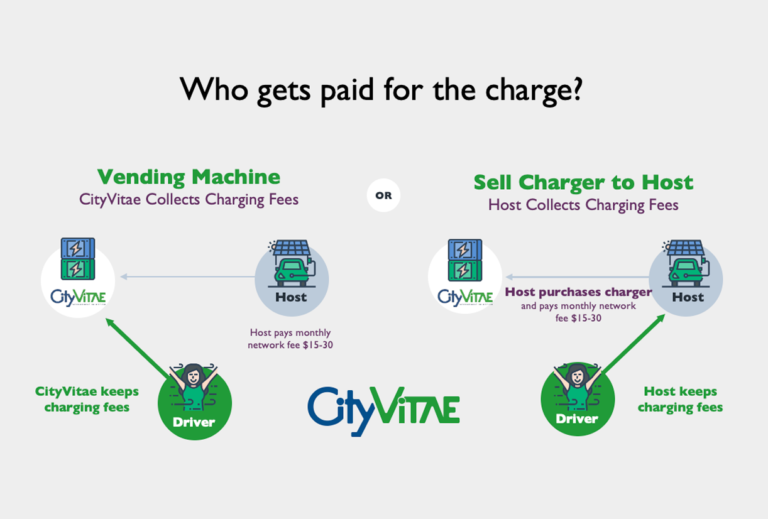
Choosing the Best EV Charging Business Models To Maximize ROI
When it comes to EV charger ownership, there are various strategies for optimizing your return on investment in both multi-family and commercial charging settings.
 Start your project ↗
When it comes to EV charger ownership, there are various strategies for optimizing your return on investment in both multi-family and commercial charging settings.

To properly accommodate One Paraiso’s residents, CityVitae installed the first Level 3 Fast Charger for multi-family use in the state of Florida.
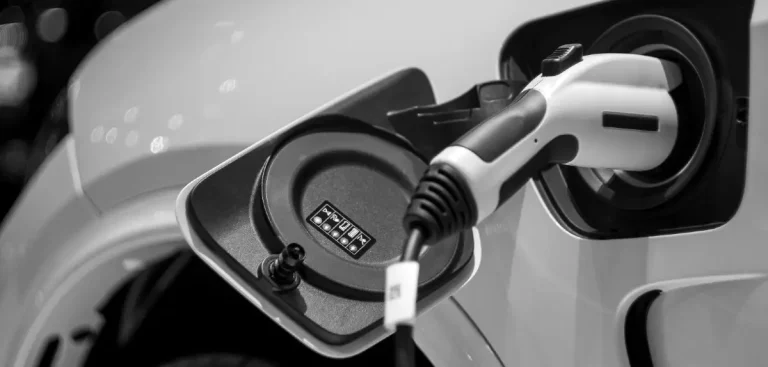
Understanding the type of plugs used by different EVs is an essential aspect of efficient and effective EV charging.
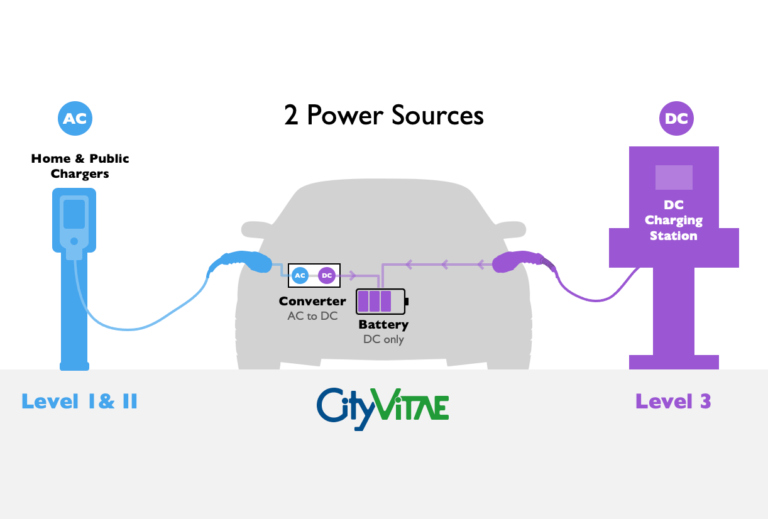
EV charging technology is categorized into three charger levels, each with varying charging speeds and applications.

As the Covid-19 pandemic unfolded in early 2020 and lockdowns were implemented in countries around the world, global car sales experienced an unprecedented drop. Several surveys have shown that the drop in global sales in 2020 settled around -14% and that it was significantly larger than the one observed during the global financial crisis of 2007-2009. The question is, do we know if electric vehicles were impacted the same way?
Anna Mª Francino, Business Developer, CityVitae

In this article on monetization, we want to talk about one of the unknown parts of electric mobility (EM): how the private sector can and should monetize the massive deployment of charging stations that will occur in our cities and roads.
Anna Mª Francino, Business Developer, CityVitae

In the race for the adoption of electric mobility, Costa Rica has made a mix of operational, tactical and strategic decisions that turned out to be the key to becoming the undisputed leader in the region in terms of the percentage of electric car purchases versus the total number of cars registered in the country.
We analyze the essence of these decisions, their advantages and disadvantages and propose some advice that any country in the world could follow based on this return of experience.
Pere Francino, CEO, CityVitae
Representatives* of 5 leading companies in the Latin American electric mobility market gathered last July 23rd in the webinar ELECTRIC MOBILITY IN THE PACIFIC COAST COUNTRIES to analyze online the situation in Chile, Colombia, and Peru.
(*) Karla Zapata for ENEL X Chile, Daniel Cámac for ENGIE Perú, Luis Díaz Granados for HINICIO Colombia, Jorge Vargas Romero for CONELSUR Perú and Jaime Parada for INGENIERIA DEUMAN Chile.
Anna Mª Francino, Business Development, CityVitae
In our last post, we have talked at length about how to promote the implementation of electromobility and what are the deterrent barriers for the potential buyer.
Among them, we find the price of the vehicle, the perception of insufficient battery autonomy, and the lack of enough public charging points to guarantee to recharge throughout the territory.
All these concerns proved to be unfounded and become an opportunity for car dealers to reconvert themselves into advisors delivering detailed explanations to their customers. Thus, the role of the salesman- adviser becomes essential to resolve such concerns.
With the growing awareness of the need to preserve the environment, potential consumers of electric cars also continue to wonder whether this switch to electric technology will really be environmentally friendly.
This concern focused on batteries leads to the question of what happens to them at the end of their life and whether their waste will represent an environmental hazard or whether, on the contrary, as in the case of range, or the number of charging points, it is unfounded.
Anna Mª Francino, Business Development, CityVitae